Asset hierarchy explained
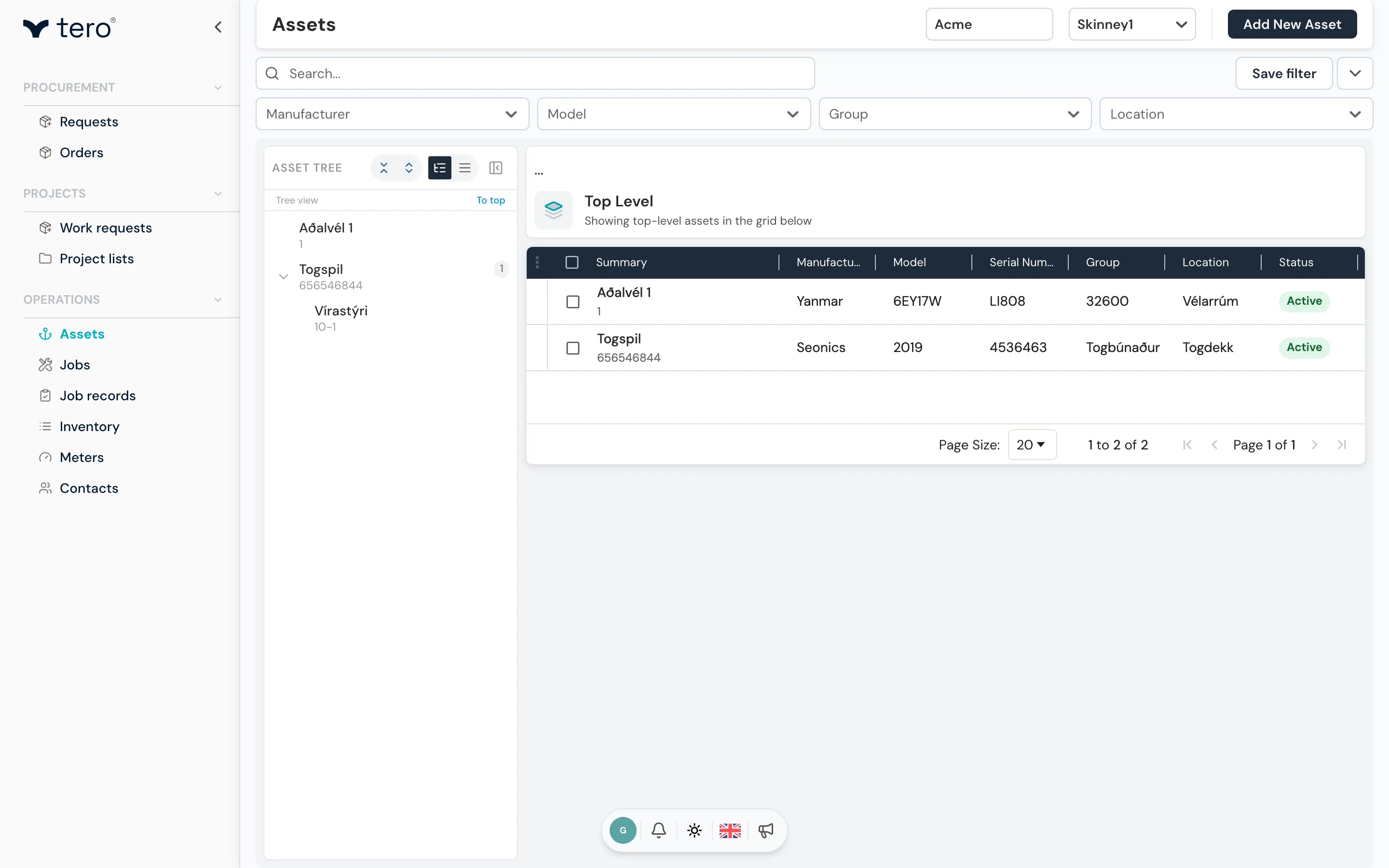
Tero.Ops models the physical world as a tree. A vessel contains engines; an engine contains pumps; a pump contains seals. Every box at every level is an asset. Hierarchy is unlimited — model the system as deep as you need.
Why hierarchy matters
When you record maintenance on a sub-component, that work rolls up to the parent automatically:
- Open the vessel page → see total maintenance hours across every system
- Open the engine page → see maintenance hours just for that engine and below
- Open the pump page → see only its history
This means a fleet manager can scan vessel-level health without drilling, while a technician sees only what’s relevant for their work.
A typical model
Vessel "Akurey"├── Engine room│ ├── Main engine│ │ ├── Cooling pump│ │ ├── Fuel injector — cylinder 1│ │ └── Fuel injector — cylinder 2│ └── Auxiliary generator├── Deck│ └── Winch — port└── Processing floor └── Filleting machineBest practices
- Model to the level you maintain. If you replace a whole pump rather than its individual seals, model at “pump” — don’t go deeper than you’ll ever touch.
- Use descriptive names. “Pump 1” is useless on a vessel with 14 pumps. “Cooling pump — main engine” is searchable.
- Standardise across vessels. If you have a fleet, use the same parent-asset names. Reports work much better when the structure matches.